House Icons: The Essential Building Blocks for Modern Digital Architecture
In the vast landscape of digital design, the smallest elements often carry the most significant weight. A single symbol can convey a complex concept instantly, guiding users through an interface with intuitive ease. Among these critical visual cues, house icons stand out as universal markers of home, location, property, and shelter. Whether you are a seasoned UI/UX designer crafting a real estate platform or a developer building a community app, the quality and versatility of your vector assets determine the polish of your final product. This exploration delves into the significance of high-quality house icons, specifically focusing on premium vector designs suitable for mobile and web applications.
The Universal Language of Residential Symbolism
Before diving into technical specifications, it is crucial to understand why house icons remain a staple in digital communication. The silhouette of a home is one of the most recognizable shapes across cultures. It triggers immediate associations with safety, return, origin, and personal space. In the context of user interface (UI) design, this recognition reduces cognitive load. When a user sees a roofed structure, they do not need to read a label to understand that they are navigating to a "Home" screen or accessing a property listing.
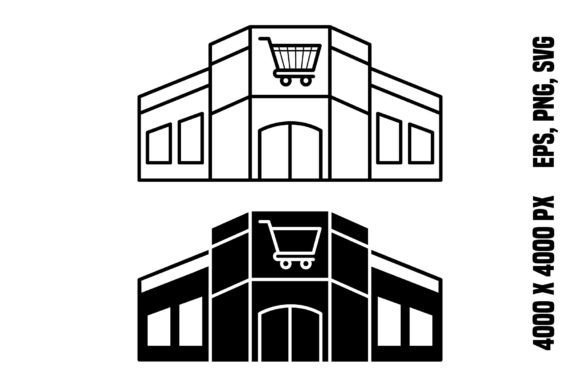
However, the simplicity of the concept does not guarantee simplicity in execution. A poorly designed house icon can look cluttered, pixelated, or generic, detracting from the overall aesthetic of an application. This is where specialized vector resources become indispensable. Professional designers require assets that are not only visually appealing but also technically robust enough to scale across various devices without losing fidelity. The demand for such precision has led to the creation of curated collections like the "Hi, welcome to the store" vector pack, which offers building icons tailored for modern digital environments.
Visual Consistency Across Platforms
One of the primary challenges in contemporary development is maintaining visual consistency across different screen sizes and resolutions. Mobile screens have evolved rapidly, moving from standard definition to retina displays and beyond. Web browsers render graphics differently depending on the device's operating system and zoom level. Raster images, which rely on a fixed grid of pixels, often suffer from blurriness when scaled up. Vector graphics, conversely, are mathematically defined paths that remain crisp at any size.
This distinction is vital for house icons used in navigation bars, header logos, or map markers. A vector-based approach ensures that the icon looks equally sharp on a small smartwatch display and a massive 4K desktop monitor. The ability to scale infinitely without degradation is a fundamental advantage that separates professional-grade assets from amateur clip art. For businesses aiming to project a polished image, investing in high-resolution vector elements is not just a stylistic choice; it is a functional necessity.
Technical Specifications That Matter
When evaluating digital assets, the file format and resolution are the cornerstones of usability. A comprehensive resource for creators typically includes a variety of formats to accommodate different workflows. The specific package referenced here provides a robust suite of tools, including transparent image files in EPS, PNG, and SVG formats. Each of these serves a distinct purpose in the design and development pipeline.
- EPS (Encapsulated PostScript): This is a legacy but still highly relevant vector format often used in professional print design and by software like Adobe Illustrator. It allows for precise editing of paths and colors, making it ideal for designers who need to customize the house icons to match a specific brand palette before exporting them for web use.
- PNG (Portable Network Graphics): While raster-based, PNG files support transparency, which is essential for overlaying icons on varied background colors. High-resolution PNGs ensure that even if a vector workflow isn't possible, the graphic remains clear. The 300 dpi specification mentioned in the asset description indicates a level of detail far exceeding standard web requirements, ensuring print-ready quality as well.
- SVG (Scalable Vector Graphics): Perhaps the most important format for modern web and mobile development, SVG is code-based. It allows developers to embed graphics directly into HTML, manipulate them with CSS, and animate them with JavaScript. Because SVGs are resolution-independent, they are the gold standard for responsive design.
The inclusion of a 4000 x 4000 pixel resolution further underscores the quality of these assets. While many web icons are delivered at much smaller dimensions, having a high-resolution source file provides future-proofing. If a client decides to use the house icon for a large-format marketing banner or a billboard later down the line, the original high-res file ensures there is no loss of quality. This flexibility is a key consideration for agencies managing multiple deliverables for a single client.
Strategic Applications in Real-World Projects
The utility of high-quality house icons extends far beyond simple navigation buttons. Their application spans various industries, each leveraging the symbolism of the building in unique ways. Understanding these use cases helps creators maximize the value of their asset library.
Real Estate and Property Management
For real estate platforms, house icons are the central motif of the entire user experience. They appear in search filters, listing thumbnails, agent profiles, and contact forms. In this sector, the icon must convey trust and professionalism. A detailed vector illustration of a building can differentiate a luxury property listing from a basic rental ad. Designers often use these icons to create infographics showing floor plans, neighborhood amenities, or investment growth charts. The versatility of the vector format allows these icons to be deconstructed or combined with other elements to create custom illustrations that tell a story about the property.
Smart Home and IoT Interfaces
The rise of the Internet of Things (IoT) has brought house icons into the realm of functionality rather than just navigation. Smart home apps use these symbols to represent physical spaces within a residence. A glowing house icon might indicate that the security system is armed, while a dimmed version could suggest energy-saving mode. In these interfaces, the clarity of the icon is paramount because users often interact with these controls quickly and intuitively. The clean lines of a well-designed vector house icon ensure legibility even on small touchscreens, reducing the risk of user error.
Community and Local Services
Applications focused on local services, such as food delivery, ride-sharing, or neighborhood watch groups, rely heavily on location-based imagery. House icons serve as anchors for user addresses, delivery points, and service zones. On a map interface, a stylized house icon acts as a pin, instantly communicating "this is your location" or "this is the destination." The ability to customize the color and stroke width of these icons via SVG allows developers to align them perfectly with the map's color scheme, ensuring they stand out against satellite imagery or street maps.
Workflow Integration for Professionals
Integrating new assets into an existing design system requires careful planning. For professionals working with the described vector pack, the workflow begins with selecting the appropriate format based on the end goal. If the project involves branding materials for print, the EPS file is the starting point. Designers can open this file in vector editing software to adjust the geometry, perhaps simplifying the roofline or changing the window details to fit a minimalist brand identity.
Once the design is finalized, the asset can be exported to SVG for web implementation. Developers appreciate the lightweight nature of SVG files, which contribute to faster page load times—a critical factor for SEO and user retention. The transparency of the PNG versions offers a quick solution for non-technical stakeholders who need to place the icon into presentation slides or social media graphics without needing advanced design software.
This multi-format approach streamlines collaboration between departments. Marketing teams can work with the high-res PNGs for campaigns, while engineering teams utilize the SVGs for the application build. The shared foundation of the same high-quality vector source ensures that the house icon remains consistent across all touchpoints, reinforcing brand recognition.
Considerations for Selection and Customization
While pre-made vector packs offer immense convenience, successful implementation often requires a degree of customization. Not every house icon fits every architectural style or brand voice. Some brands may prefer a flat, geometric interpretation of a house, while others might lean towards a more organic, hand-drawn aesthetic. The vector nature of the provided assets empowers designers to make these adjustments easily. Paths can be modified, colors can be swapped, and strokes can be thickened or thinned to achieve the desired look.
Furthermore, accessibility is a growing concern in digital design. Icons should not be the sole method of conveying information; they should complement text labels. However, the clarity of the icon itself aids users with visual impairments or those scanning content quickly. A high-contrast, clearly defined house icon improves the overall accessibility of an interface. When selecting or modifying these assets, designers should consider how the icon performs in grayscale or low-light modes, ensuring it remains distinguishable in all contexts.
Future Trends in Iconography
As technology evolves, so too does the way we visualize concepts. The trend in iconography is moving towards dynamic and interactive elements. Static images are giving way to animated icons that respond to user actions. Because the core assets discussed here are available in SVG format, they are perfectly positioned for this shift. Animations can be added to the house icons to show doors opening, lights turning on, or roofs being lifted, adding a layer of engagement that static images cannot provide.
Additionally, the integration of 3D rendering into 2D interfaces is gaining traction. While the current focus is on vector 2D designs, the principles of clean geometry and scalable resolution apply equally to 3D assets. The discipline of creating high-fidelity vector house icons lays the groundwork for understanding spatial relationships and lighting, skills that are transferable to emerging 3D design tools.
Ultimately, the value of a resource like the "Hi, welcome to the store" vector collection lies in its ability to adapt. It provides a solid foundation upon which creators can build innovative experiences. Whether for a startup launching a new app or an enterprise updating its legacy systems, the right set of house icons serves as a reliable tool in the digital toolkit.
In conclusion, the journey from a simple concept to a polished digital product relies heavily on the quality of the foundational elements. House icons, often overlooked, play a pivotal role in shaping user perception and interaction. By utilizing high-resolution, multi-format vector assets, professionals can ensure their projects meet the rigorous standards of modern design. The combination of technical precision, aesthetic versatility, and broad applicability makes these building blocks an essential component for anyone serious about creating impactful mobile and web applications.