Evaluating the Hello Word Art Graphic SVG for Your Design Projects
In the landscape of digital design, the choice of file format often dictates the longevity, versatility, and visual fidelity of a project. Among the myriad options available, the Hello Word Art Graphic SVG stands out as a specific yet representative example of how scalable vector graphics can transform simple typography into a dynamic visual asset. This digital depiction of the word "Hello," crafted with creative flair, is not merely an image; it is a code-based structure that allows for infinite manipulation without quality loss. For designers, marketers, and content creators aged 20 to 50 who are tasked with selecting the right resources for web, print, or hybrid media, understanding the distinct advantages and limitations of this format is crucial for making informed decisions.
Defining the Distinctive Nature of Vector Typography
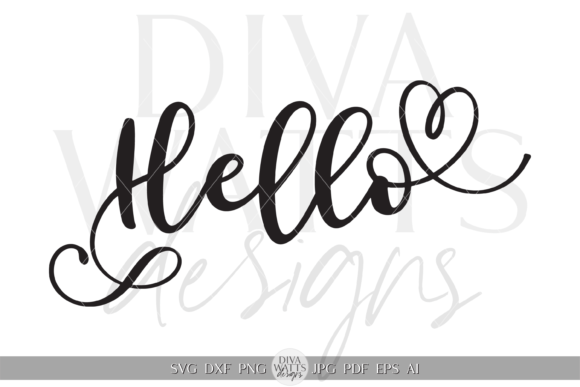
The Hello Word Art Graphic SVG is fundamentally different from the raster images that dominate many stock libraries. While a JPEG or PNG relies on a grid of pixels to construct an image, an SVG (Scalable Vector Graphics) uses mathematical equations to define lines, curves, and shapes. When you examine a Hello Word Art Graphic SVG, you are looking at a file where the letterforms are constructed from paths. This architectural difference provides unparalleled versatility. The graphic can be stylized using various fonts, colors, and effects, while maintaining crispness at any scale. Whether the text needs to appear as a tiny icon on a mobile navigation bar or a massive billboard headline, the edges remain sharp and defined.
Designers often infuse these graphics with artistic elements such as swirls, shapes, or illustrations to enhance visual appeal. Because the underlying structure is vector-based, these decorative elements are just as scalable as the text itself. This capability ensures that the intricate details of the art do not become muddy or pixelated when resized. In essence, this graphic serves as a warm and welcoming visual expression, greeting viewers with the universal salutation "Hello" in a visually captivating manner. Its adaptability and scalability not only make it suitable for diverse digital platforms but also allow for effortless customization to suit various design needs.
Comparing Formats: SVG Versus Raster Alternatives
When evaluating resources for a project, it is essential to compare the Hello Word Art Graphic SVG against its primary alternatives: raster formats like PNG, JPG, and TIFF. Each format serves a specific purpose, and the "best" choice depends entirely on the intended application.
Raster images are generally preferred for complex photography where subtle gradients and millions of colors are required. However, for typographic art, they present significant tradeoffs. If you stretch a PNG version of a "Hello" graphic beyond its original resolution, the result is blurriness and jagged edges. Conversely, the SVG format ensures seamless integration and customization. A key advantage of the Hello Word Art Graphic SVG is its file size efficiency for line art. While high-resolution raster files can become bloated, vector files often remain lightweight because they store instructions rather than color data for every pixel.
Another critical comparison involves interactivity. Raster images are static blocks of data. An SVG, however, is written in XML code, which means it can be manipulated directly via CSS or JavaScript. This opens up possibilities that raster formats cannot match. For instance, a designer could animate the swirls within the Hello Word Art Graphic SVG to rotate on hover or change colors based on user interaction. This fusion of artistry and technology delivers a vibrant and inviting message to its audience in a way that static images simply cannot replicate.
Key Differences at a Glance
- Scalability: SVG remains crisp at any zoom level; raster images degrade when enlarged.
- File Size: SVGs are typically smaller for geometric and typographic designs; rasters grow larger with higher resolution.
- Editability: Individual elements in an SVG can be recolored or reshaped without re-drawing; raster edits require destructive tools or layers.
- Interactivity: SVG supports animation and scripting; raster images are purely visual.
Assessing Strengths and Tradeoffs in Real-World Scenarios
While the Hello Word Art Graphic SVG offers significant benefits, it is not a universal solution for every design challenge. Understanding its strengths and limitations helps in determining when it is the right choice and when readers may need another option.
Strengths in Web and UI Design
For web design and digital illustrations, the SVG format is often the superior choice. It loads quickly, ensuring better performance metrics, which is vital for SEO and user experience. The ability to style the graphic with CSS means that a single Hello Word Art Graphic SVG file can serve multiple themes—changing from dark mode to light mode automatically by altering the fill color in the stylesheet. This reduces the number of assets a developer must manage and streamlines the workflow.
Print Considerations
In the realm of print materials, vectors are traditionally the gold standard for logos and large-format signage. The Hello Word Art Graphic SVG ensures that printed greetings look professional on business cards, brochures, or banners. However, there is a nuance to consider: some older printing workflows or specific pre-press software may still prefer PDF or EPS formats. While most modern systems handle SVG well, it is worth verifying compatibility with the specific printer or production house before finalizing the asset.
Limitations and Complexity
The primary tradeoff lies in complexity. If the "Hello" graphic includes extremely complex photographic textures or realistic shading that mimics a photograph, converting this to a vector path can result in a massive, unwieldy file with thousands of anchor points. In such cases, a high-quality PNG might actually perform better in terms of rendering speed and file management. Additionally, editing an SVG requires familiarity with vector software like Adobe Illustrator or open-source alternatives like Inkscape. Users accustomed to basic photo editors may find the learning curve steeper.
Decision Factors: Choosing the Right Asset
To make an informed decision, consider the following factors regarding your specific project requirements:
- Target Medium: Is the asset primarily for screen display? If yes, the Hello Word Art Graphic SVG is likely the optimal choice due to its responsiveness and interactive potential. If the output is strictly for high-end photographic print, ensure the vector complexity does not hinder the printing process.
- Customization Needs: Will the design need frequent updates? If you anticipate changing colors, swapping fonts, or animating parts of the graphic, the SVG format's editability makes it far more future-proof than a static raster image.
- Performance Constraints: For websites aiming for maximum speed, the small file size of a clean SVG contributes to faster load times compared to multiple high-resolution PNGs.
- Accessibility: Text within an SVG can be made accessible to screen readers if coded correctly, whereas text in a raster image is invisible to assistive technologies unless alt-text is manually added.
Practical Applications and Integration
The versatility of the Hello Word Art Graphic SVG extends across various industries. In e-commerce, it can serve as a dynamic banner for seasonal greetings, easily animated to catch the shopper's eye. In corporate communications, it can be used as a signature element in email headers, scaling perfectly whether viewed on a desktop monitor or a smartphone. As an emblem of creativity and friendliness, this graphic embodies the fusion of artistry and technology, delivering a vibrant and inviting message to its audience.
Furthermore, the ability to embed the SVG code directly into HTML allows for seamless integration without the need for external image requests. This technique can significantly reduce server load and improve page rendering speeds. Designers can also leverage the "masking" capabilities of SVGs to reveal parts of the graphic progressively, creating sophisticated storytelling effects that are impossible with standard image formats.
Conclusion on Strategic Selection
Selecting the right graphic asset is a balance between aesthetic goals and technical constraints. The Hello Word Art Graphic SVG represents a powerful tool in the modern designer's toolkit, offering a unique combination of scalability, editability, and interactivity. While it may not replace raster images for photorealistic content, its dominance in typographic and illustrative design is clear. By weighing the strengths of vector scalability against the specific needs of the project, professionals can ensure their visual communications are both technically sound and creatively compelling. Ultimately, the decision to use an SVG should be driven by the desire for flexibility and the need to maintain visual integrity across the ever-expanding array of digital devices and platforms.